Water treatment used to be something many homeowners barely thought about. If the tap ran clear and the shower worked, that was usually good enough. These days, though, people are paying closer attention to what’s coming through their pipes, how it tastes, and how it affects appliances, plumbing, and everyday routines.
That doesn’t mean every home needs a complicated treatment setup. In fact, the opposite can be true. The most effective approach is often the one that addresses a specific water concern without adding unnecessary equipment.
Modern systems have also become more flexible. Some are designed around municipal supplies, others around private wells, and some can be configured to handle several water-quality concerns at once. The technology has changed, but the basic idea hasn’t: understand the water first, then choose a practical way to improve it.
Start With the Source
Before considering treatment equipment, take a look at where the water comes from.
A private well can have naturally occurring minerals, sediment, iron, or other characteristics influenced by local groundwater conditions. Municipal supplies are treated before reaching homes, but the water can still have taste, odor, hardness, or plumbing-related concerns.
Testing provides a much better picture than simply judging water by appearance.
Clear water isn’t necessarily free of dissolved substances, and cloudy water doesn’t automatically mean there’s a serious issue. A proper analysis can help identify what actually needs attention.
That information becomes especially valuable when choosing equipment because different technologies are designed for different jobs.
Municipal Water Isn’t Necessarily Problem-Free
People sometimes assume that city water doesn’t require any additional treatment because it has already been treated before reaching the property.
That’s not always the whole story.
Municipal water can travel through miles of distribution piping before entering a home. Conditions within household plumbing can also affect the water that comes from the tap. Taste and odor preferences vary, too. Some homeowners simply want an extra level of filtration for drinking water.
The key is understanding what you’re trying to improve.
If the main concern is chlorine taste, for example, carbon filtration may be more appropriate than a system designed primarily for hardness. If scale is the issue, softening may make more sense.
Treatment should have a purpose.
Modern Equipment Can Be More Adaptable
One interesting development in residential water treatment is the move toward systems that can be configured for different household needs.
Instead of installing a massive setup with every available filtration stage, homeowners can often select equipment based on water testing, household size, flow requirements, and specific concerns.
The Evolve Series® EVRCS is an example of equipment designed around a more modern approach to water treatment, with an emphasis on system performance and practical household operation.
The important thing isn’t simply the product name. What matters is whether a particular system is correctly matched to the property.
A treatment system should have enough capacity to handle peak water use without becoming an unnecessary burden in terms of maintenance, space, or operating costs.
Why System Design Matters
Water treatment equipment works best when the entire setup is considered rather than one component being chosen in isolation.
For example, sediment can affect downstream filtration. Hardness can contribute to scale. Certain water-quality conditions can influence how quickly filters become exhausted.
A well-planned system may therefore use different treatment stages, each with a specific role.
This is also where professional sizing becomes useful. Household water demand isn’t always obvious from the number of people living in a home. Several showers, appliances, and faucets can operate at the same time, especially during busy mornings.
A system that works beautifully under light demand may struggle during peak usage if it wasn’t sized properly.
Technology Should Make Maintenance Easier
Nobody wants a water-treatment system that requires constant attention.
Fortunately, modern equipment can include automatic controls and features intended to simplify routine operation. But “automatic” doesn’t mean “maintenance-free.”
Filters still need replacement. Components need inspection. Settings may need adjustment. Some systems require periodic cleaning or servicing.
Before purchasing equipment, ask what ownership looks like after installation.
How often are consumable parts replaced? Are replacement components readily available? What does professional servicing involve? Is there an alert when something needs attention?
Those questions are worth asking before the system is installed rather than six months afterward.
Dual-Chamber Designs Offer a Practical Advantage
Continuous access to treated water can matter in busy households.
A treatment system shouldn’t create unnecessary interruptions just because one portion of the equipment is undergoing a regeneration or service cycle.
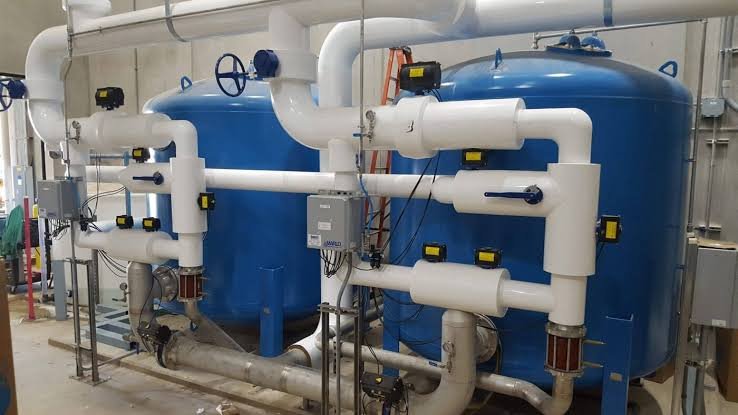
That’s where dual-chamber technology can be useful. Depending on the system design, having two treatment chambers can allow one chamber to continue supplying treated water while the other goes through its regeneration process.
For households that use water throughout the day, that can be a meaningful convenience.
Still, technology shouldn’t be selected simply because it sounds advanced. The question is whether the feature solves a real problem for the property.
If a smaller household has low water demand and minimal treatment requirements, a simpler system may be perfectly adequate.
Space Is Part of the Equation
Water-treatment equipment needs a home of its own.
That sounds obvious, but it’s surprisingly easy to forget during the buying process. A system might look compact in a showroom or product photograph and feel considerably larger once it’s sitting beside the water heater.
Leave room for maintenance.
Technicians need access to filters, valves, controls, and connections. Homeowners also need enough space to perform basic tasks without turning every filter replacement into an awkward balancing act.
Planning the installation location early can prevent headaches later.
Efficiency Is About More Than Energy
When people talk about efficient water treatment, they often focus on electricity or water consumption. Those things matter, but efficiency also includes how well the equipment matches actual demand.
An oversized system can waste resources. An undersized system can struggle to deliver the desired results.
Good efficiency means using the right amount of treatment for the water conditions and household usage.
That requires a little homework upfront, but it can pay off over the life of the system.
Don’t Let Technology Replace Common Sense
Modern water treatment has become more sophisticated, but homeowners don’t need to become engineers to make a good decision.
Start with the basics.
Test the water. Identify the problem. Understand household demand. Consider available space. Ask about maintenance. Compare long-term ownership costs, not just the initial price.
Then choose technology that addresses those specific needs.
The most impressive-looking system isn’t automatically the best one. A well-sized, properly installed system that quietly does its job can be far more valuable than a complicated setup filled with features you’ll never use.
Better Water Is a Long-Term Decision
Choosing water treatment equipment isn’t just about today’s water. It’s about how the system will perform months and years from now.
Households change. Families grow. Appliances are added. Water use increases or decreases. Maintenance needs evolve.
That’s why flexibility and proper sizing matter.
A thoughtful installation can provide better water quality while helping protect plumbing and water-using appliances. Just as importantly, it can make the whole experience less frustrating.
At the end of the day, good water treatment isn’t about chasing the newest technology for its own sake. It’s about finding a sensible balance between water quality, convenience, efficiency, and long-term reliability.
When that balance is right, the equipment fades into the background. You turn on the faucet, fill a glass, take a shower, and get on with your day. That’s usually the real measure of a successful water system — not how complicated it looks, but how effortlessly it works.