There’s a particular frustration that experienced SEO practitioners know well. You’ve done everything right on a piece of content by the traditional playbook. Good keyword targeting, proper on-page optimization, solid backlinks, technically clean page. And yet it ranks below a competitor page that seems less optimized by those same metrics but covers the topic in a way that feels different.
That difference is usually entity clarity. And understanding it changes how you think about SEO strategy.
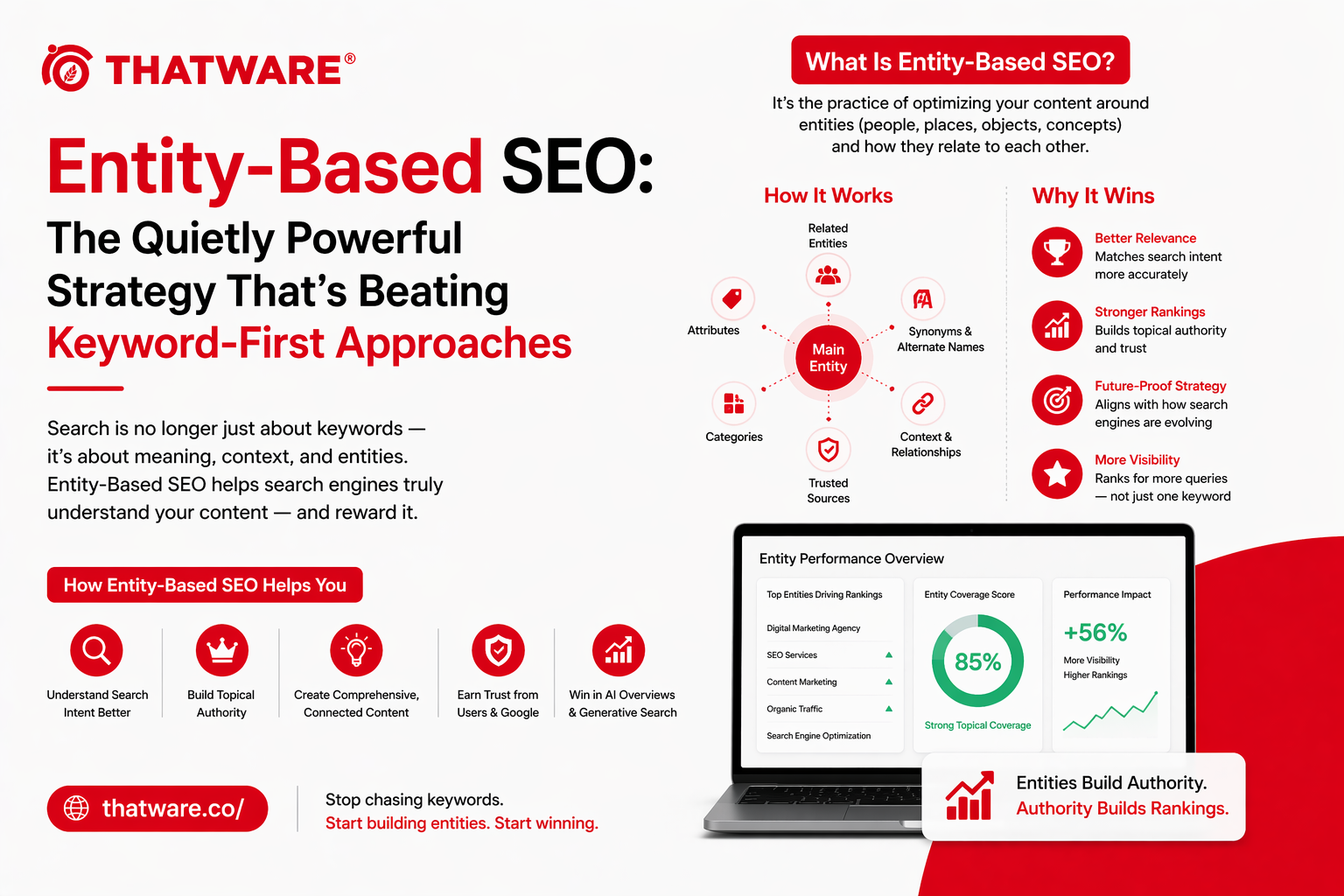
Entities, in the way Google uses the term, are things: people, places, organizations, concepts, products, events. Not keywords describing those things, but the things themselves as Google understands them. Google’s Knowledge Graph is a map of entities and the relationships between them, built over years from structured and unstructured data sources. When Google evaluates a piece of content, it’s not just matching keywords. It’s assessing which entities the content is about, how those entities relate to each other, and whether the content’s treatment of those entities is consistent with how authoritative sources represent them.
A page about “personal injury attorneys” that also clearly covers the entities of specific injury types, legal processes, jurisdictions, and regulatory bodies in contextually accurate relationships is demonstrating entity-level understanding. A page that just mentions “personal injury attorney” frequently is demonstrating keyword presence. These are meaningfully different, and Google’s systems have gotten quite good at distinguishing them.
What this means for content strategy is a shift in the starting question. Instead of “what keywords should this page target,” the question becomes “what entities is this page about, what are the important entities related to those, and how does the content establish clear, accurate, contextually appropriate relationships between them?”
The answer to that question produces content that reads differently from keyword-first content. It’s more comprehensive in covering the conceptual neighborhood of a topic. It uses terminology more precisely. It makes relationships explicit. And it tends to be more genuinely useful, which is not a coincidence. Entity clarity and user value are aligned because both require actually understanding the subject matter.
From a technical SEO perspective, entity optimization involves structured data implementation that helps Google confirm entity associations, internal linking architecture that connects related entities in logical clusters, and author and organizational entity optimization that builds the site’s overall entity authority in its core subject areas.
entity based seo services that are well-executed go beyond just adding schema markup. They involve a strategic analysis of how your domain’s entity relationships map onto Google’s Knowledge Graph, where there are gaps or misalignments, and how content and technical strategy can strengthen those associations over time. It’s the kind of work that produces durable ranking improvements because it’s strengthening the underlying understanding that Google has of your site’s authority, not just optimizing for current signal weights.
For the businesses that have been puzzled by competitors outranking them despite seeming keyword disadvantages, entity analysis almost always reveals the answer. The competitor’s content is operating with better entity clarity. Their topical relationships are cleaner. Their treatment of the core entities is more aligned with how authoritative sources represent those entities.
The fix isn’t more keywords. It’s semantic seo services that approach content from the question of what the content means and what it’s about, rather than what words it contains. That reframing produces different content decisions and, consistently, better ranking outcomes in the current search environment.
One practical entry point: look at the top-ranking pages for your most important terms and analyze what entities they cover beyond the primary topic. Not just the keywords they use, but what concepts, organizations, people, events, and relationships they establish. That’s the entity neighborhood Google has decided is relevant to that search context. If your content doesn’t cover that neighborhood, you’re competing at a disadvantage that keyword optimization alone won’t overcome.