
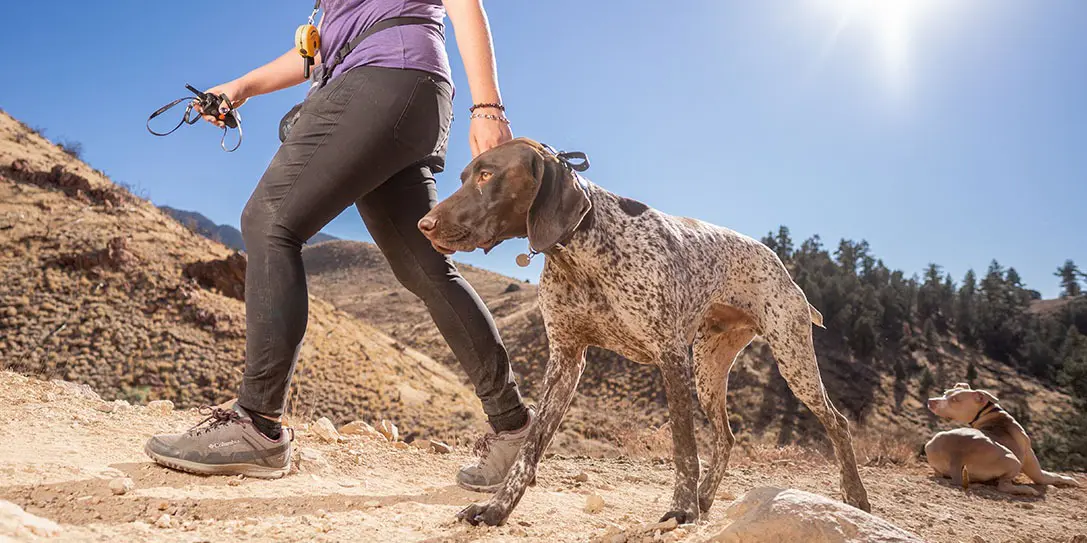
Off-leash dog training is about more than teaching a dog to walk without a leash. It is about building reliable obedience, impulse control, recall, and focus so your dog can respond appropriately when distractions compete for attention.
Rob’s Dog Training helps owners build these essential skills through structured training that supports safer, more reliable off-leash behavior. With the right preparation, off-leash skills can give dogs greater freedom while helping owners feel more confident and in control.
Why Off-Leash Dog Training Requires More Than Recall
A strong recall is one of the most important skills a dog can learn, but it is only one part of successful off-leash behavior.
When a dog is allowed to move freely, there are more distractions to manage. A squirrel may run across the path, another dog may appear nearby, or an unfamiliar sound may suddenly capture your dog’s attention. A dog that responds perfectly in the living room may behave differently when faced with these real-world challenges.
Effective off-leash dog training therefore builds a collection of skills that work together:
- Reliable recall when called
- Attention toward the handler
- Impulse control around distractions
- Loose-leash and directional skills before going off leash
- Sit, down, stay, and place commands
- Ability to disengage from interesting sights and smells
- Calm behavior around people and other dogs
The goal is not simply to make a dog obey commands in a controlled environment. The goal is to teach behaviors that remain useful as the environment becomes more challenging.
Start Off-Leash Training With a Strong Foundation
Before removing the leash, owners should establish dependable basic obedience. A dog should understand what is expected and have repeated opportunities to practice those behaviors successfully.
Begin in a low-distraction environment. Practice simple cues such as sit, stay, come, down, and place before gradually introducing more distance and distractions.
This progression matters because dogs learn through repetition and context. If an owner immediately expects reliable recall in a busy park, the dog may be asked to perform a skill before it is ready.
A better approach is to increase difficulty gradually:
- Practice indoors with minimal distractions.
- Move to a secure outdoor area.
- Introduce greater distance between you and your dog.
- Add mild distractions.
- Practice around increasingly interesting environments.
- Use a secure enclosed space before considering appropriate off-leash locations.
This creates a clearer path from basic obedience to dependable real-world behavior.
Off-Leash Dog Training and Reliable Recall
Recall is the foundation of safe off-leash freedom. Your dog needs to understand that returning to you is expected even when something more exciting is happening nearby.
Start by making recall practice predictable and rewarding. Use a consistent verbal cue and avoid repeatedly calling your dog when you know they are unlikely to respond.
One common mistake is using recall only when something enjoyable is about to end. If “come” always means going home, getting into the car, or losing access to play, the cue can become less appealing.
Instead, practice recall during ordinary training sessions and reinforce successful responses. Call your dog, reward the return, and sometimes allow them to go back to an appropriate activity.
This helps create a useful association: coming back to the handler does not always mean the fun is over.
Teach Impulse Control Before Giving More Freedom
Impulse control is another essential component of off-leash reliability.
Dogs naturally respond to things that attract their attention. A moving animal, interesting scent, unfamiliar person, or playful dog can create powerful motivation. Training teaches the dog to pause and respond to the handler instead of immediately following every impulse.
Useful exercises include asking your dog to:
- Wait before going through doors
- Hold a stay while you create distance
- Look toward you when distracted
- Leave an object alone when instructed
- Pause before approaching another dog
- Return attention to you after investigating a safe distraction
These behaviors may appear simple, but they teach an important principle: excitement does not automatically determine what happens next.
Practice Around Distractions Gradually
Many owners discover the difference between obedience and reliability when distractions enter the picture.
A dog may come immediately when called in the backyard but ignore the same cue when another dog is nearby. That does not necessarily mean the dog has “forgotten” training. The environment has simply increased the difficulty.
Distraction training should therefore be progressive.
If your dog struggles around other dogs, for example, begin at a distance where your dog can still focus on you. Reward calm attention and gradually reduce the distance only when your dog remains responsive.
The same principle can apply to:
- People
- Wildlife
- Traffic
- New environments
- Toys
- Food
- Other animals
- Strong scents
Successful training is not about overwhelming a dog with distractions. It is about giving the dog manageable challenges and building reliability step by step.
Use the Right Environment for Off-Leash Practice
Training in an appropriate environment can make a major difference.
An enclosed training area provides a safer setting for practicing distance, recall, and responsiveness before a dog is exposed to the risks of an open public space. A long line can also provide additional management during some stages of training while allowing the dog more freedom to move.
Owners should also understand that training reliability does not automatically make every location appropriate for off-leash activity.
Roads, crowded areas, unfamiliar properties, and locations with wildlife or other hazards may create risks that training alone cannot eliminate. Local rules and posted requirements should always be followed.
Off-leash freedom should be earned through demonstrated reliability and used where it is legally and practically appropriate.
Why Professional Dog Training Can Help
Owners often know which behaviors they want to improve but have difficulty identifying why progress has stalled.
A professional trainer can observe the interaction between dog and handler, identify gaps in communication, and establish a structured training plan based on the dog’s behavior and the owner’s goals.
Professional guidance can be especially helpful when a dog:
- Ignores recall around distractions
- Pulls toward people or animals
- Becomes overly excited outdoors
- Struggles to settle
- Shows inconsistent obedience
- Has difficulty responding from a distance
- Becomes reactive in certain environments
Individualized instruction can also help owners understand how to continue training between sessions. Consistency matters because dogs need clear expectations beyond the training environment.
Board & Train or Private Lessons for Off-Leash Skills?
Different dogs and owners may benefit from different training formats.
Private lessons can be useful for owners who want to participate directly in the process. Working one-on-one with a trainer allows the owner and dog to practice skills together while receiving guidance that can be applied between sessions.
Board & Train programs provide another approach. With immersive training, dogs spend extended time with professional trainers and can practice obedience, manners, and behavior skills as part of their daily routine.
Rob’s Dogs currently offers both Board & Train and Private Lessons, allowing owners to choose an approach that fits their circumstances and training goals. Its programs focus on individualized training, obedience, and behavior correction rather than relying on a one-size-fits-all approach.
Regardless of the format, owner involvement remains important. A dog may learn valuable skills during professional training, but those skills need to carry over into everyday life.
How to Maintain Off-Leash Reliability
Off-leash training should not end once a dog performs well during a few sessions.
Dogs benefit from ongoing practice because environments, distractions, and circumstances change. Short training sessions incorporated into everyday routines can help maintain responsiveness.
Continue practicing recall and obedience at different distances and in different appropriate environments. Reward desirable responses and avoid putting your dog in situations where failure is highly likely.
Most importantly, pay attention to changes in behavior. If your dog’s recall becomes inconsistent, temporarily reduce the difficulty and return to a more controlled environment.
Reliability is maintained through repetition, not assumption.
Build Freedom Through Responsibility
Off-leash freedom should be viewed as the result of training rather than a replacement for it.
A dog that can reliably return when called, remain attentive around distractions, control impulses, and respond to basic commands is better prepared to handle greater freedom responsibly. The owner’s role is equally important: knowing when to practice, when to use additional management, and when an environment is unsuitable for off-leash activity.
The most successful off-leash dog training programs focus on creating communication between dog and handler. When dogs understand what is expected and owners know how to reinforce those expectations consistently, freedom becomes more manageable and enjoyable.
For owners who want structured guidance, Rob’s Dogs offers professional dog training through Board & Train and Private Lessons, with training tailored to individual dogs and their goals.
If your goal is a dog that can enjoy appropriate off-leash freedom while remaining responsive, start by building the skills that make that freedom possible.